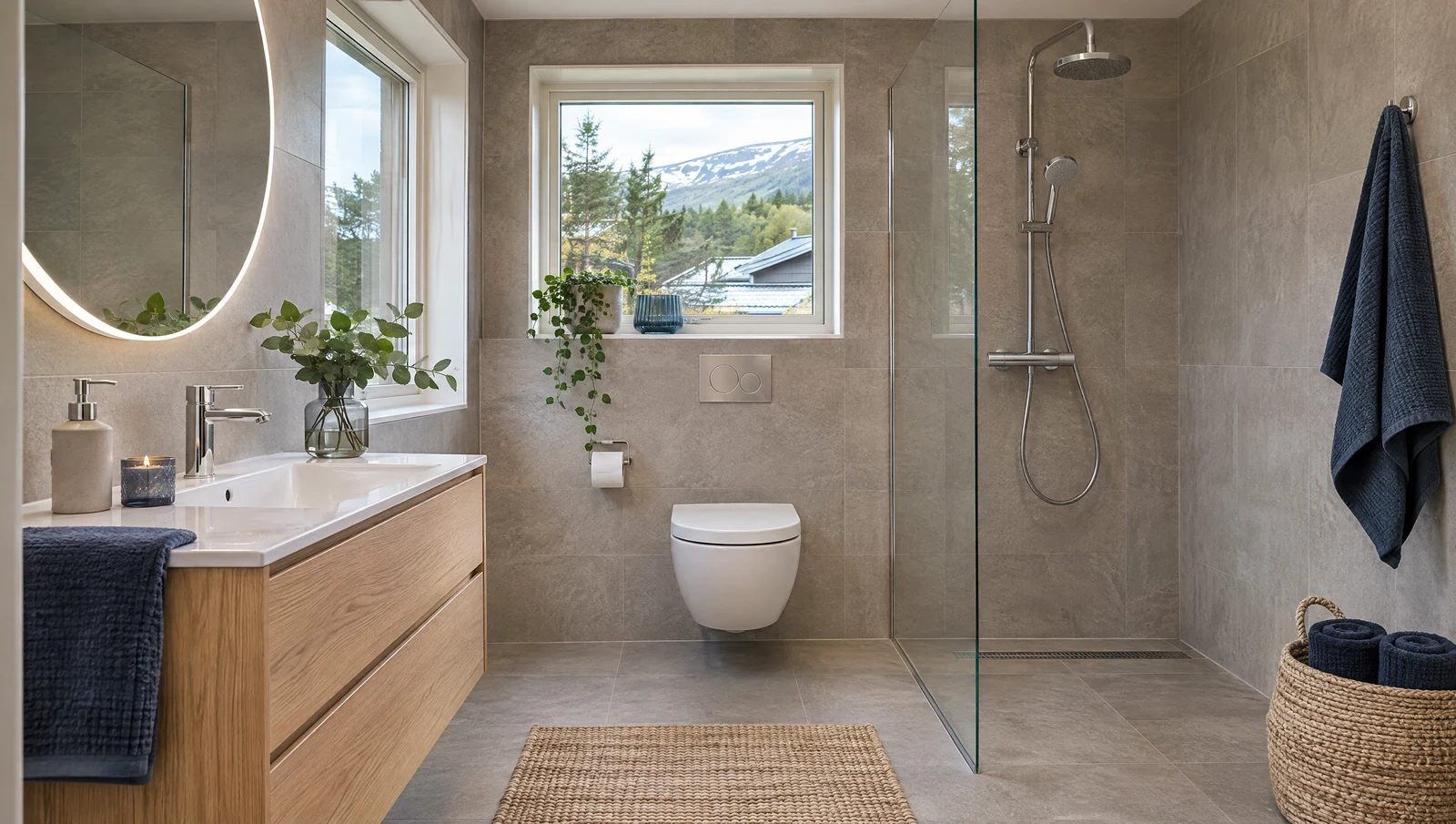
Start with a drawing and your needs
Decide where the shower, toilet, basin and possibly a bath will go before anyone starts demolition. Moving the floor drain and drains affects the floor and can require more work, so the placement decides the scope.
Consider the pipes while the wall is open
Once the bathroom is stripped out, you can see what is behind the walls. If the pipes are old, you should consider replacing them now. It is cheaper to replace pipes while the wall is open than to open it again in a few years.
Before the tradespeople arrive
- Choose taps and fittings and other equipment early, so the pipes can be laid correctly.
- Empty the bathroom of loose items, cabinets and textiles.
- Find the main stopcock and show it to the tradespeople.
- Agree on access, parking and when someone can be at home.
- Check with the housing cooperative or the owners' association about rules and notification if you live in a flat.
- Take photos of the bathroom before the work starts.
Do not remove the floor drain, membrane or pipes yourself before the work has been agreed. That makes it difficult to document and inspect the wet room.
The order of work
Demolition and survey, pipework and drains, wet room membrane and sealing, tiling and grouting, and finally fitting the equipment and a final inspection. Each stage builds on the previous one, so do not skip steps or leave the wet room work to someone who is not trained.
Documentation
Ask for documentation of the wet room work carried out. You will need it when selling and in any insurance claim. Ask us what we provide when the job is finished.