Plumbing advice from the plumber
Short, practical guides that help you avoid damage and make good choices.
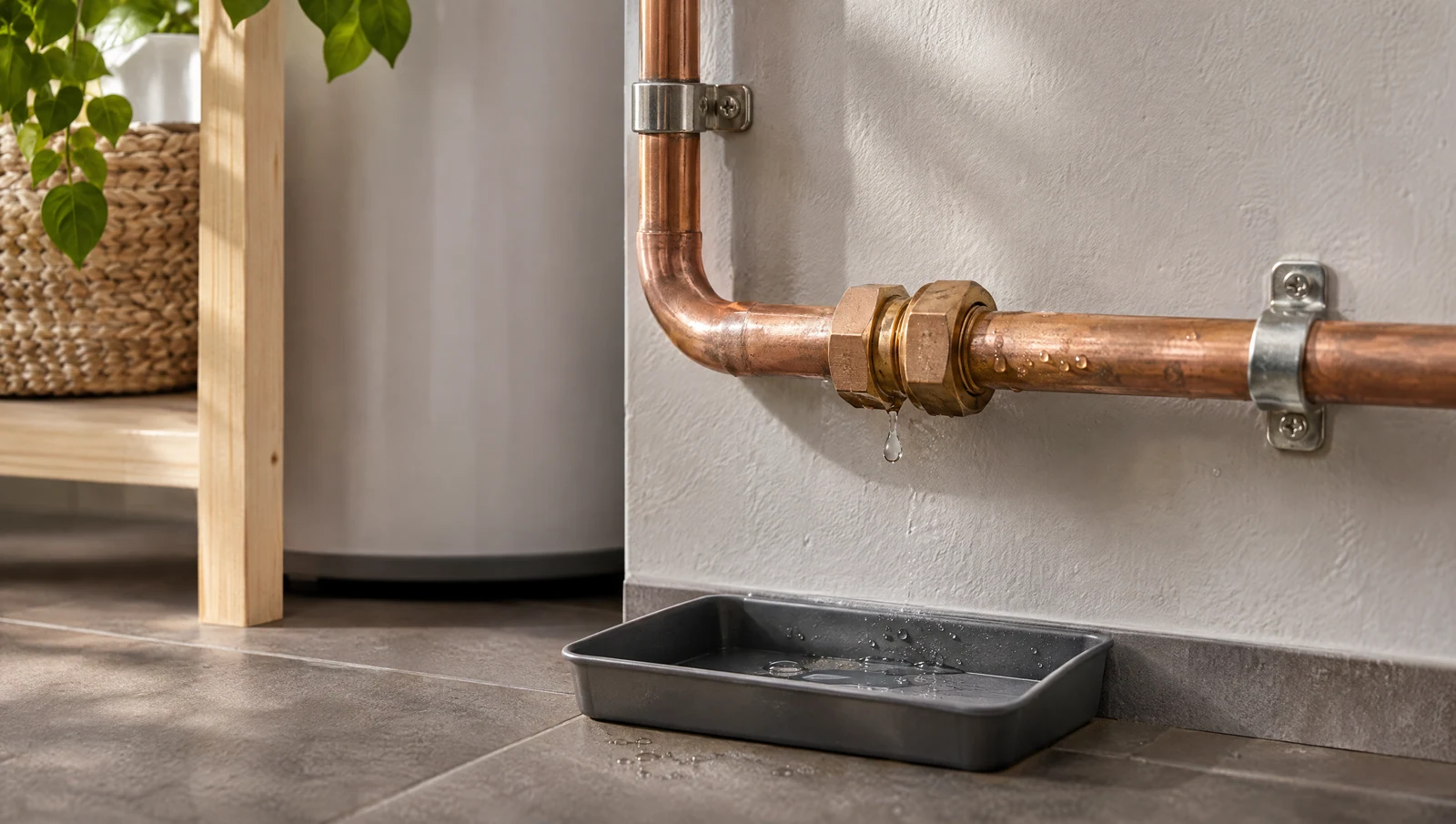
Water leak: what to do before the plumber arrives
How to stop the water, limit the damage and prepare for the plumber. Simple steps you can take yourself, and what you should avoid doing.
Read the articleWater leaks
Where is the main stopcock, and how do you shut off water?
Find the main stopcock before anything happens. Here are the most common locations and how to check that the stopcock actually works.
Read the articleHow to check for a hidden leak using the water meter
A simple test with the water meter can reveal a leak you cannot see. Here is how to do it, and what to do if the meter keeps running.
Read the articleWater damage and insurance: how to document the damage
Good documentation makes the insurance claim easier. What to photograph and write down before, during and after the repair.
Read the articleDamp on basement pipes: condensation or a leak?
Wet pipes in the basement do not have to mean a leak. Here is how to tell condensation from a leak, and what can be done about it.
Read the articleTap will not turn off: how to limit the damage
When the tap will not close, or the water just keeps running. What to do first, what to avoid, and when to call a plumber.
Read the articleLeak around the toilet: water on the floor
Water around the base of the toilet can come from several places. Here is how to find out what it is, and what to do before the plumber arrives.
Read the articleMoisture damage after a leak: drying and follow-up
The leak has stopped, but the moisture remains. How to think about drying out, when to contact a damage restoration firm, and what to document.
Read the articleWater damage in a housing cooperative: who to contact
A leak in a block or terrace: who to notify first, what is often shared plant, and why you should check the bylaws and the insurance.
Read the articleHow to shut off the water in a flat or cooperative
Leak in a flat: how to find and close the right stopcock, what to do if there is only a shared main valve, and who to notify.
Read the articleCleaning a floor drain: how to remove bad smells
A smelly floor drain in the shower, kitchen or utility room is often caused by hair, grease or a dry trap. Clean it safely and know when to call a plumber.
Read the articleKitchen drain leak: find the cause and fix it safely
A leak under the kitchen sink often starts as small drips from the trap. Find out whether it is the drain or the supply, and what you can do yourself.
Read the articleBathrooms and wet rooms
Replacing a bathroom: plan the order with your plumber
A new bathroom goes more smoothly when the plumber, wet room work and finishes are planned in the right order. Here are the key steps.
Read the articleSigns of damp and hidden damage in wet rooms
Moisture damage in bathrooms and utility rooms is often discovered late. These are the signs to take seriously, and what to do when you see them.
Read the articleBlocked shower drain: causes and safe fixes
Water standing in the shower and draining slowly? Here are the usual causes, what you can safely do yourself, and when to contact a plumber.
Read the articleWeak flow in the shower: possible causes
The shower has a weak flow although the rest of the house has normal water pressure. The causes we look for most often, and what you can check yourself.
Read the articleBefore you buy a home: what to look for in the pipes
Buying a home: which signs of water and drain problems to notice at a viewing, and what a plumber can assess before you make up your mind.
Read the articleWater heaters and smart water heaters
When should you replace your water heater?
How long a water heater lasts, the signs that it is starting to fail, and what to consider before you buy a new one.
Read the articleSmart or standard water heater: which suits you?
A smart water heater can be controlled digitally and shift heating to cheaper hours. Here is what to consider before you choose.
Read the articleWater heater safety valve dripping: is it dangerous?
A little dripping during heating is normal, but constant dripping is a warning sign. How to assess the situation.
Read the articleLimescale in taps and water heaters: causes and fixes
White deposits on taps, shower heads and the water heater come from limescale in the water. How to spot the problem and which measures exist.
Read the articleUneven shower temperature: what could be the cause
The shower suddenly turns cold or hot. Common causes, from the mixer tap and water heater to others using water at the same time.
Read the articleHow to drain a water heater safely
Does the water heater need draining for a replacement or repair? Here is the order that keeps the job safe, and when to leave it to a plumber.
Read the articleRepairs and service
Traps and drain smells: how it works
Is there a smell of sewage from a floor drain or sink? It is often down to the trap. Here is how it works and what you can check yourself.
Read the articleBanging pipes: water hammer explained
Do the pipes bang or knock when you close a tap? Here are the common causes of water hammer and what a plumber can do about it.
Read the articleNew washing machine or dishwasher: what must be in place
Before you buy a new washing machine or dishwasher, check the water connection, drain and stopcock. That way you avoid leaks and problems.
Read the articleHow to prepare for a plumber visit
A few simple preparations make the plumber's visit quicker and more accurate: photos, access, reaching the stopcock and relevant information.
Read the articleHow to read a plumber's invoice
An explanation of what is usually on a plumber's invoice: labour, materials, travel and extra charges, and what you can ask about.
Read the articleHow to clean a tap aerator and shower head
A weak or crooked water jet is often caused by limescale and dirt in the aerator or shower head. How to remove and clean them without harming the tap.
Read the articleLow water pressure: causes and solutions
Low water pressure can come from a clogged tap aerator, a half-closed valve or a supply fault. Narrow down the cause and decide what you can do yourself.
Read the articleRunning toilet: how to stop it yourself
A running toilet can waste a lot of water. Find the fault in the cistern, see what you can replace yourself, and know when to call a plumber.
Read the articleDripping tap: how to repair it yourself
A dripping tap can often be fixed by replacing a washer or cartridge. Here is how to do it on the most common tap types, and when to get help.
Read the articleBlocked toilet: how to clear it safely and effectively
A blocked toilet can often be cleared with patience, hot water and a plunger. Here are the steps, what not to do, and when to call a plumber.
Read the articleBlocked sink: how to fix it at home
Grease, food scraps and hair most often block a sink. Here are safe methods to try, what to be careful with, and when to call a plumber.
Read the articleKitchens
Heat pumps
Heat pump maintenance: what you can do yourself
A heat pump works best with simple care. Here is what you can do yourself, and what should be left to professionals.
Read the articleWater-based underfloor heating: what to know
How water-based underfloor heating works, what can go wrong, and what to ask before choosing it for a bathroom, living room or the whole house.
Read the articlePump stations
Outdoor water and drainage
Backflow in the cellar: prevention and what to do
Wastewater coming up through cellar floor drains is unpleasant and can cause major damage. How to reduce the risk and what to do in an emergency.
Read the articleRoots in the drain pipe: signs and solutions
Tree roots can get into outdoor drain pipes and cause repeated blockages. How to recognise the problem and what can be done.
Read the articleWater around the house: drainage and outdoor drains
Water standing against the foundation wall or running towards the cellar entrance may come from drains or drainage. Here is what a plumber can look at.
Read the articleFrost damage
Autumn check: what to go through before winter
A half-hour round this autumn can save you from frost damage and water leaks. Here is a checklist you can go through yourself.
Read the articleProtecting an outdoor tap from frost before winter
How to prepare the outdoor tap for frost: what happens if water is left standing in the pipe, and which measures protect against frost damage.
Read the articleFrozen water pipes: prevention and safe thawing
A frozen water pipe can burst when the ice thaws. Learn how to thaw a pipe without an open flame, which mistakes to avoid, and how to prevent frost.
Read the articleCabin service
Winterising the cabin: how to avoid frost damage
An unheated cabin can get burst pipes and ruined equipment. Here is a simple checklist for shutting off the water properly before winter.
Read the articleThe cabin in spring: how to turn the water back on
After winter, you should not simply open the tap. Here is how to proceed carefully so you spot damage before it becomes serious.
Read the article