What limescale is
Limescale is minerals that come with the water and are left behind as white or greyish deposits, especially where the water evaporates or is heated. How much limescale there is in the water varies between waterworks and private wells. Ask the waterworks, or have the water analysed, if you want to know.
How you notice it
- White deposits on taps, glass shower screens and the shower head.
- The spray from the shower becomes uneven because the holes in the shower head clog up.
- The tap aerator (the strainer on the tap) clogs, and the flow becomes weaker.
- The water heater takes longer to heat up, or makes more noise than before.
Simple measures for everyday life
Wipe taps and glass after use, and there will be less build-up. Unscrew the shower head and tap aerator, then rinse and brush them with water, as described in the article on cleaning a tap aerator. Do not use strong products or chemicals.
When a plumber should take a look
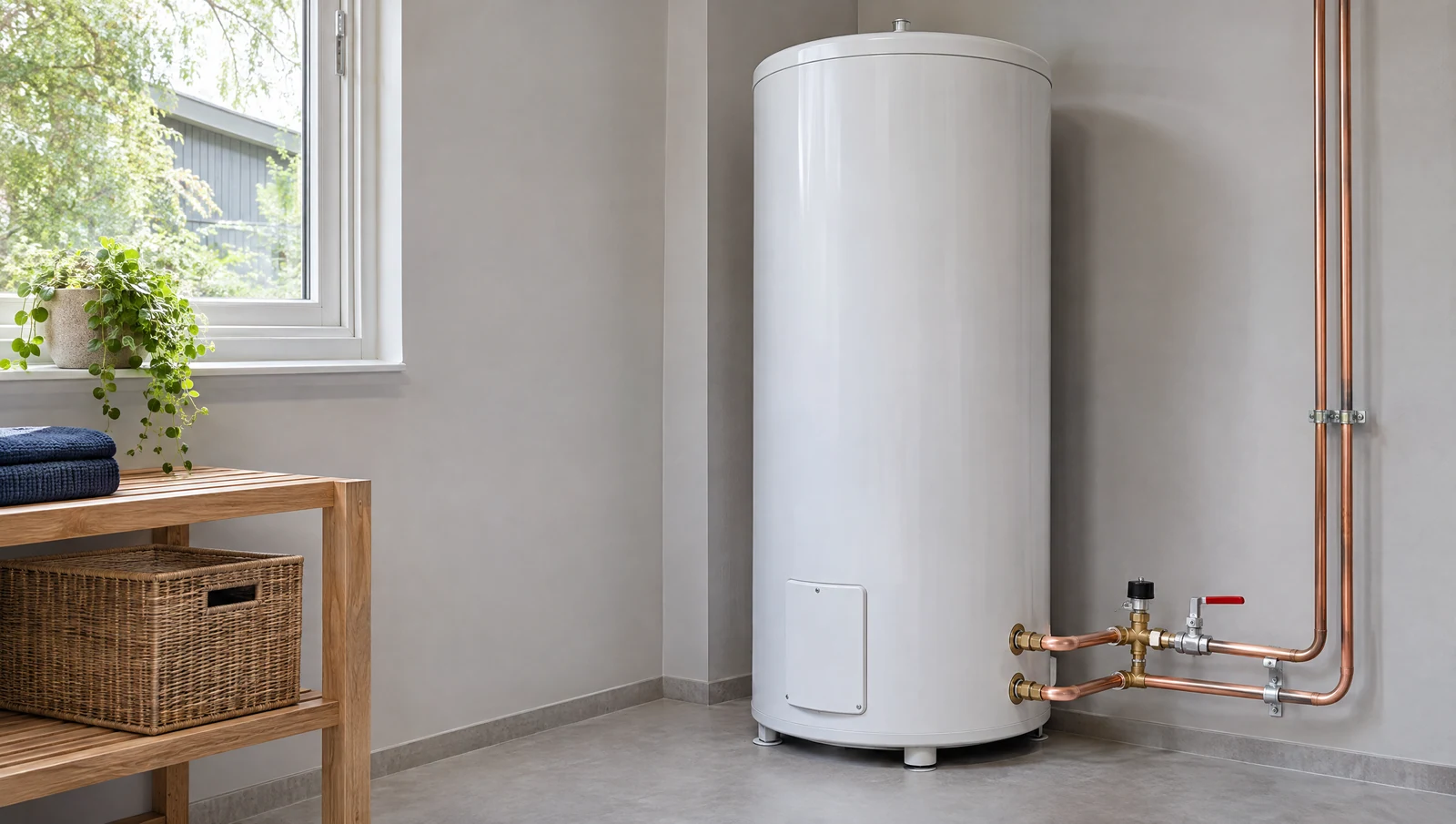
A lot of limescale in a water heater can reduce its performance and shorten its life. A plumber can assess the water heater, open it for inspection and suggest measures. There is also water treatment that can be fitted to the pipework. Whether it is worth it in your home depends on the water and the system.
If the deposits keep coming back
Describe what you see and where, and we can assess whether the equipment needs inspection or replacing.