When the sink gets blocked
Most blocked sinks are caused by grease, food scraps, coffee grounds and hair that have built up in the pipe. It is often possible to clear them yourself, but start with the mildest methods and be careful with chemicals.
Simple measures you can try yourself
First remove as much standing water as possible from the bowl. Then try the following, in this order:
- Hot water from the tap: let it run for a few minutes. It can dissolve grease and soap residue. Do not use boiling water in the drain. It can damage plastic pipes and seals, and you can scald yourself.
- Sink plunger (suction cup): fill the sink with a little water so the cup is covered, and plunge hard 15 to 20 times. If you have a double sink, block the other drain with a cloth.
- Baking soda and vinegar: pour half a cup of baking soda into the drain, then half to one cup of white vinegar. Leave the drain open without a plug, let it work for 15 to 30 minutes and rinse with hot water. Use it on its own, never together with drain cleaner or chlorine, and not if you have recently used chemicals in the drain.
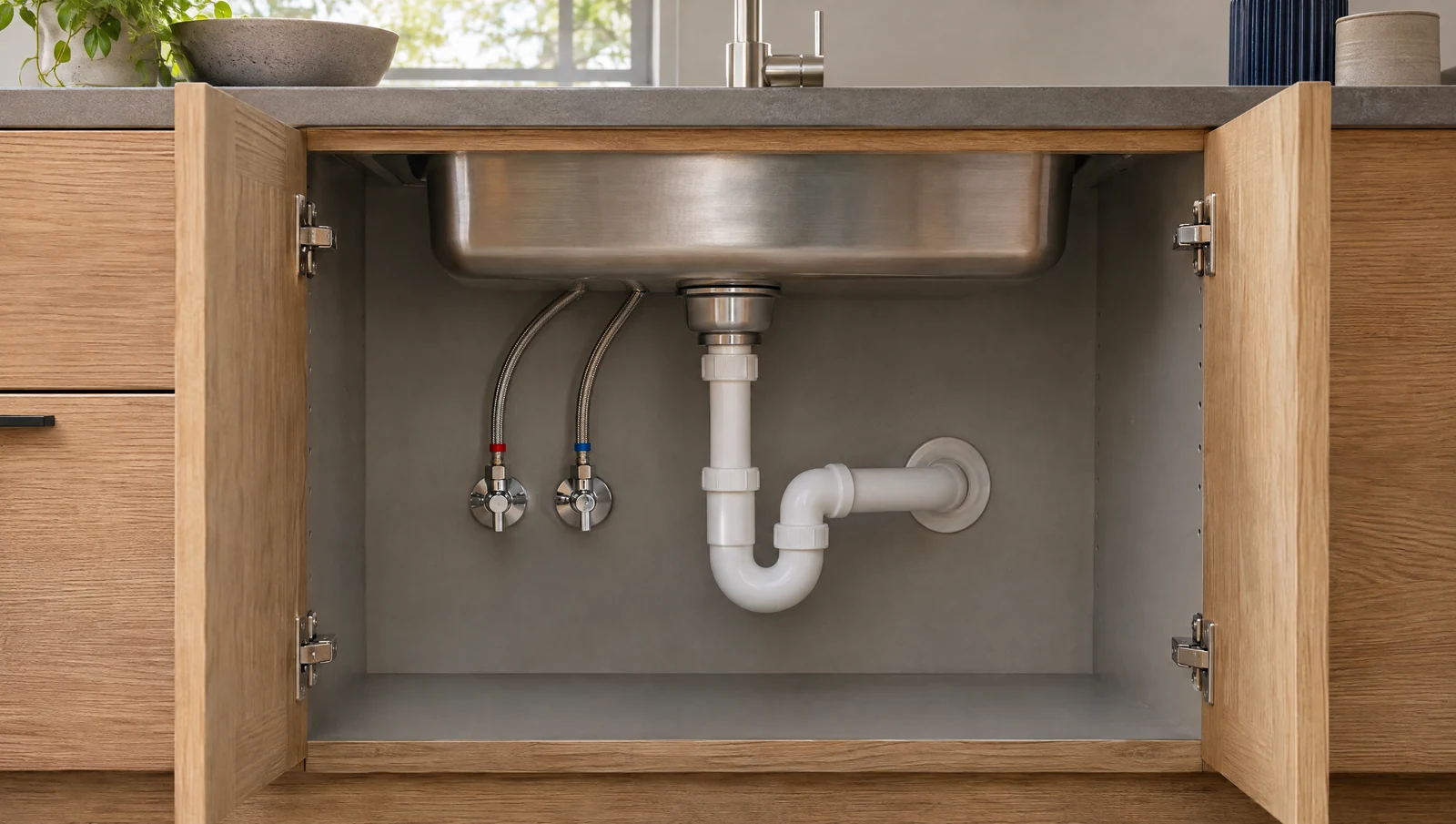
- Clean the trap: put a bucket underneath, wear gloves, unscrew the trap and clean it. Check the seals and refit. Check that nothing drips from the joints.
- Drain snake: a pipe snake is fed into the pipe and gently pulled back and forth to loosen a blockage. Go carefully, so you do not damage the pipes and joints.
When you should not try it yourself
Do not try several methods if you have already used chemicals in the drain, if several floor drains are slower at the same time, if you smell sewage, or if the water rises up somewhere else. Call a plumber.
Chemical drain cleaners: be careful
Drain cleaners from the shop, whether powder or gel, often contain caustic soda or acid. They are corrosive and can damage skin, eyes, pipes and seals. Use them only if the methods above have not helped, and follow the instructions carefully.
- Wear rubber gloves and safety goggles, and ventilate well.
- Never mix several products, and do not use drain cleaner together with baking soda and vinegar, chlorine or acid.
- Do not use drain cleaner in a toilet.
- Do not use a plunger or snake in a drain that is full of drain cleaner. The liquid can splash up.
- If it does not help, do not try several products one after another. Tell the plumber which product you have used, so that the plumber can protect themselves.
- Biological cleaners with bacteria and enzymes are milder, but are better suited to prevention than to clearing a blocked sink.
Prevention
The best thing is to stop grease and food scraps from ending up in the drain.
- Do not pour frying oil, grease or food scraps into the sink. Collect grease in a container and throw it in the general waste.
- Use a strainer in the sink to catch food particles and hair.
- Rinse with hot water from the tap after washing up.
- Clean the trap a couple of times a year.
When should you call a plumber?
Call if the methods above do not help, if several drains in the house run slowly, or if you smell sewage. The problem may then lie further along the pipe, for example roots, a damaged pipe or heavy deposits, and flushing or a camera is needed to find the cause.