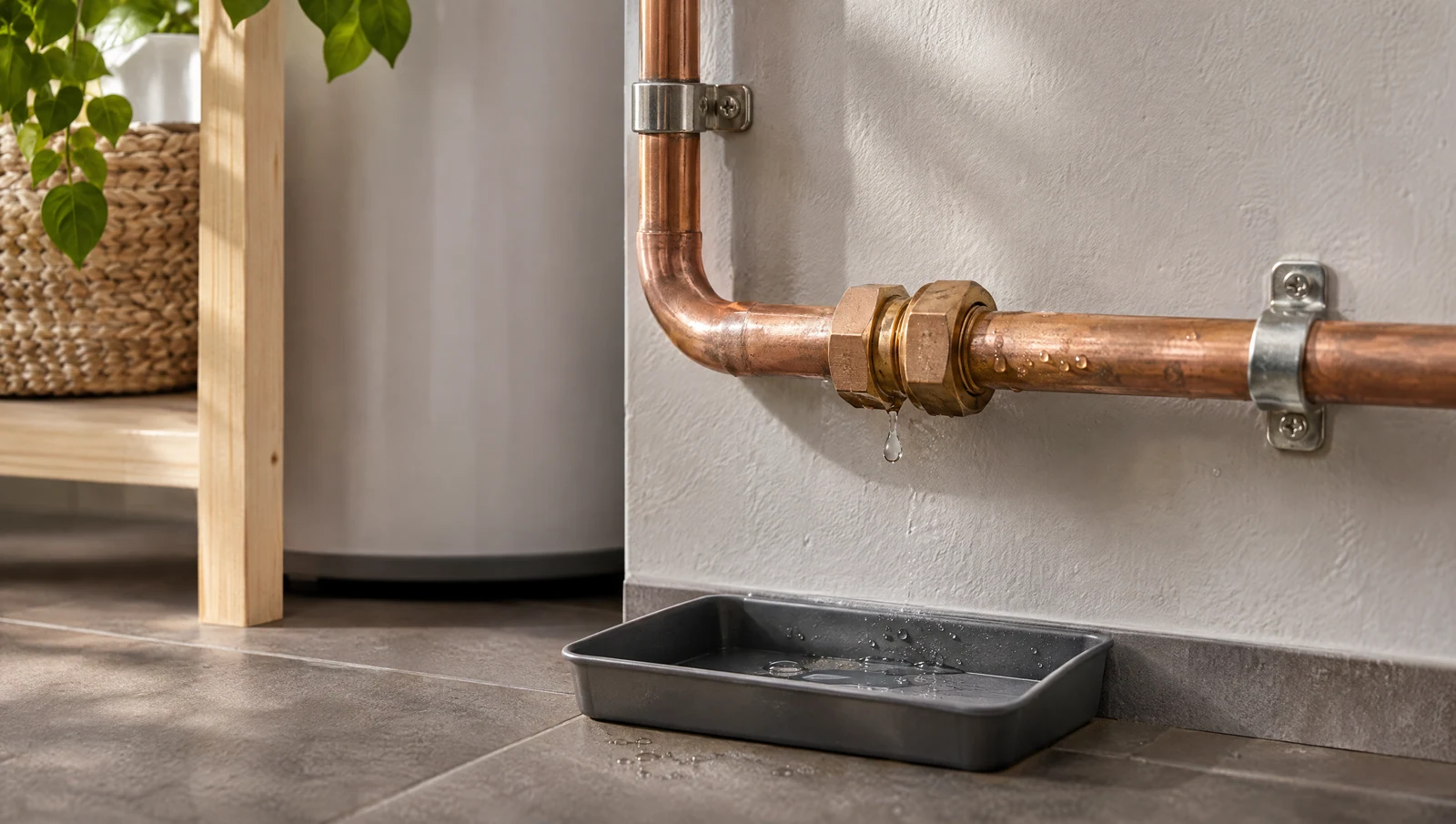
A leak under the kitchen sink often starts as small drips from the trap or a damp streak along a pipe. You can often find the cause with a simple check. Here you get the method, what you can replace yourself, and when you should call a plumber.
Do this first
- Mop up straight away. Water quickly damages the cupboard base and the worktop.
- Put a bowl underneath where it drips.
- If the leak is on the supply side, close the stopcocks under the sink. If there are none, or you are unsure, close the main stopcock.
Drain or supply?
- Supply (pipes and hoses under pressure): leaks even when the sink is not in use.
- Drain (plastic pipes and trap): leaks only when you run water or run the dishwasher.
A drain leak is the most common under a kitchen sink. The method below applies to drains.
Fault-finding step by step
- Dry everything, and put paper around the suspect points. Then you can see where it gets wet first.
- Check the nuts and connections on the trap and the pipes. They should be firm by hand. Tighten gently, no more than a quarter turn, or the plastic may crack.
- Check the seals. If the rubber is hard, flat or cracked, replace it. You can get new seals, O-rings and traps from building supplies stores and plumbers' merchants.
- Take off the trap over a bucket, remove grease and food scraps, rinse and refit. Check that the seals sit correctly and that the pipes are not under strain.
- Look for cracks or white lines in the plastic. That points to wear, and the part should be replaced, not patched.
- Check the joint between the sink and the basket strainer waste (the strainer at the bottom). Tighten the fixing nut and replace the seal if necessary.
- Follow the hose from the dishwasher to the drain. Tighten the hose clip, replace the hose if it is cracked, and lay it in a loop or high enough to prevent backflow.
If it still drips
Put a bowl or plate underneath and change the paper regularly. Avoid using the sink until a plumber has looked at it.
Mistakes that cause a new leak
- Tightening plastic connections too hard.
- A conical seal fitted the wrong way round.
- Pipes under strain after fitting. Adjust the lengths so the parts rest naturally.
- A build-up of grease in the trap that presses the seals out of line.
When should you call a plumber?
- Visible cracks in the pipes or the trap.
- You cannot find the leak, or it comes back.
- Damp under the plinth, discolouration or a swollen cupboard base.
- A leak on the supply side, since the water is under pressure.