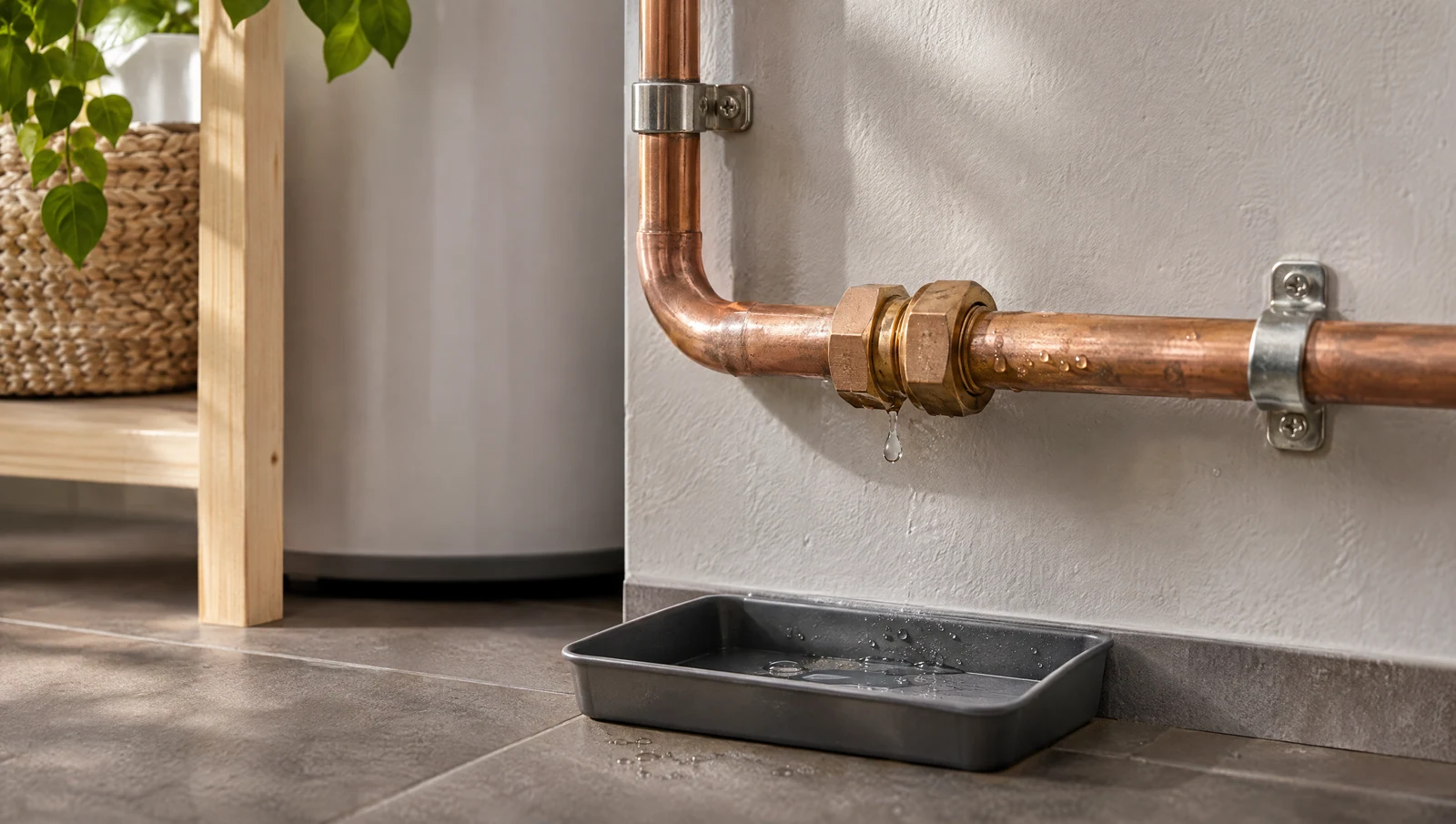
Shut off the water first
The most important thing is to stop the supply. Find the main stopcock, which is often in the basement, utility room or technical room where the water enters the house, and close it. Learn where it is before anything happens.
If the leak comes from a single tap, toilet or machine, it may be enough to close the stopcock right next to it. The rest of the house can then still use water.
Secure the power and limit the damage
If there is water near sockets, light fittings or the fuse box, you should switch off the power to the room at the fuse box, but only if you can reach it without stepping in water. Never step into water if you are in doubt about the power, and contact an electrician or the grid company.
Move loose items and rugs away from the wet area, and collect water with buckets and towels. Take photos and video of the damage before you tidy up, because your insurer will want documentation.
Call a plumber
Explain what has happened, where the leak is and whether the water is shut off. That lets us judge how quickly we need to come and what equipment to bring.
If it is urgent, you can call our emergency line on 69 26 80 00. Together we will work out what needs to be done first.
What you should not do
Do not try to seal a cracked pipe with tape and hope it holds. Temporary fixes can fail again when the pressure builds up.
Do not open up walls or floors at random. It is easier to find the fault if you leave it untouched until the plumber has looked at it.