When no water comes from the tap during a cold spell, a pipe has often frozen. The ice can burst the pipe, but the damage often shows only when the ice thaws. Here is what you can do yourself, what you should leave alone, and when you should call a plumber.
Signs that your pipes have frozen
The most common sign is that no water comes from one tap during a cold spell while the rest of the house works. You may also see frost or ice on pipes in the cellar, crawl space and unheated rooms.
Why do pipes freeze?
Pipes freeze when the temperature falls below zero and the water stands still. The most exposed pipes are those in uninsulated cellars, crawl spaces, outdoor taps and outer walls. Draughts through cracks in the wall, thin pipes and missing insulation increase the risk.
Before you begin
- Open the tap connected to the frozen pipe, so that water and steam can escape when the ice melts.
- Close the main stopcock before you thaw if you see that the pipe has cracked, if water is running, or if you cannot see the whole pipe. The damage is then smaller if the pipe turns out to be cracked. Open it again carefully when the pipe has thawed, and look for leaks.
- Put towels and a bucket under the pipe.
- Find the frozen spot by feeling for cold, hard sections of the pipe.
Never use an open flame, a gas torch or a heat gun. You can damage the pipe, cause a fire or heat up a pipe that is under pressure.
How to thaw a pipe you can reach
- Warm cloths are the safest: wring out cloths in hot water, wrap them around the pipe and change them when they go cold. Start nearest the tap and work towards the frozen spot, so that the meltwater can run out.
- Hair dryer: only if you can see the whole pipe and are sure it is intact and dry, and only in dry surroundings. Never on a pipe that is cracked or wet, and never where there is standing water. Hold the dryer a few centimetres from the pipe and move it slowly.
Keep electrical equipment away from water and spills. Lay cables so that they do not lie in water, and do not leave the equipment switched on unattended. If you are in doubt whether the pipe is intact and dry, use only warm cloths.
When you should not try it yourself
Do not try to thaw the pipe yourself if it has cracked, if water is running or it is wet around it, or if you cannot find the frozen spot. Close the main stopcock and call a plumber.
The pipe is in the wall or floor
Do not cut or break open the wall or floor to reach the pipe. You could hit pipes, cables or live wiring. Shut off the water if there is a risk of a crack and call a plumber, who can find where it has frozen and thaw the pipe in a controlled way.
How to avoid frozen pipes
- Keep a steady heat in the house, even when you are away. What counts as a safe minimum temperature depends on the house and where the pipes run.
- Open the cupboard doors under the kitchen and bathroom units during cold spells, so that the heat reaches the pipes.
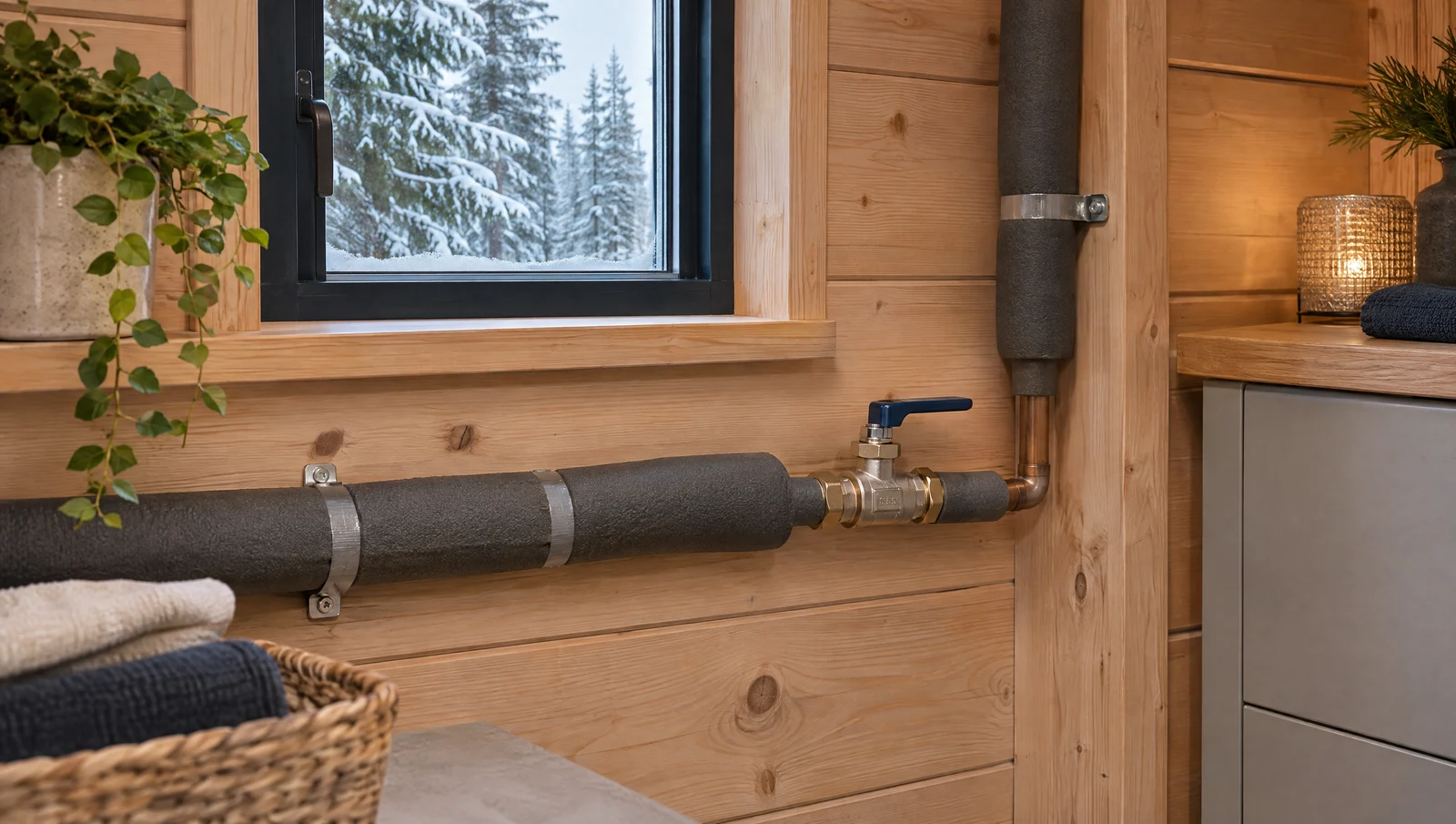
- Insulate pipes in cold rooms and crawl spaces with pipe insulation made for the purpose.
- Seal draughts in the foundation wall and outer walls.
- Disconnect garden hoses and drain outdoor taps before the first frost. Close the stopcock indoors.
- Exposed pipes can be frost-protected with self-regulating heating cable made for water pipes. Follow the manufacturer's instructions, and have an electrician fit and connect it.
- Ask a plumber to assess pipes that often freeze.
A cabin that stands empty
If the cabin stands empty through the winter, the system should be drained and secured. We are happy to help with winter preparation.
When should you call a plumber?
Call if you cannot find the frozen spot, if the pipe is hidden, if the pipe has cracked or you see water where it should not be, or if it does not free up after you have tried. Also call if you want to insulate or rebuild pipes that freeze repeatedly.