Why is the tap dripping?
The most common causes are a worn washer, a worn-out cartridge, limescale or a damaged valve seat. The tap then does not close fully, and water gets through. Over time it adds up to a lot of water, and limescale and water can damage the surface underneath. Most people can replace a washer or cartridge themselves if they work systematically.
Preparations
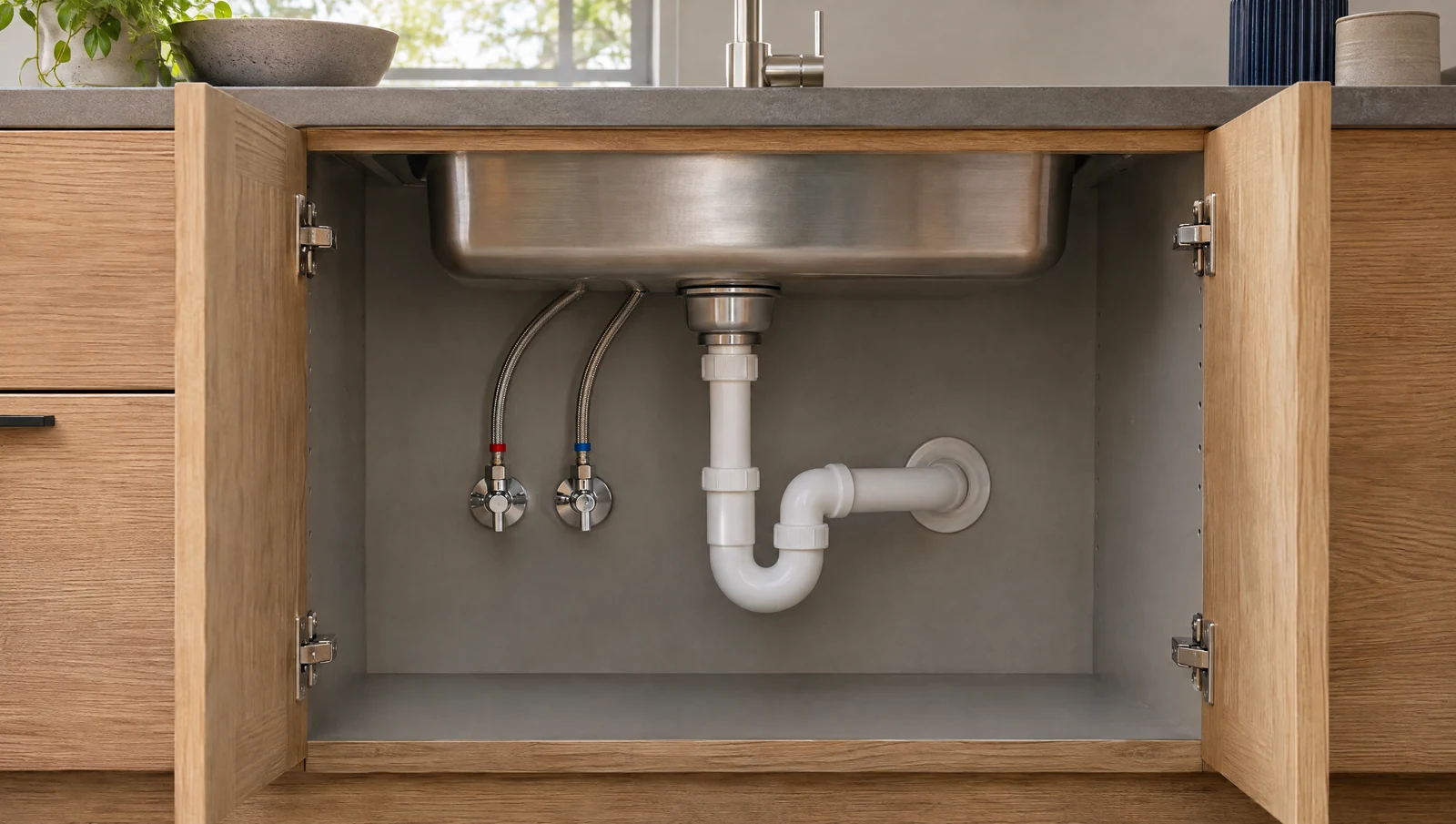
- Shut off the water to the tap with the stopcock under the sink. If there is none, close the main stopcock.
- Cover the drain with a cloth or plug, so that small parts do not fall down it.
- Have ready a screwdriver, an Allen key, an adjustable spanner and pliers. Buy washers, O-rings or a new cartridge that fit the make and model of the tap. Take the old part with you to the shop if you can.
- Take photos as you go, so you remember the order when you put it back together.
Tap with two handles and a washer
Older taps often have separate handles for hot and cold water. They use a rubber washer that is pressed against the valve. When it wears, the tap drips.
- Remove the handle. The screw is often under a small cover.
- Unscrew the nut with an adjustable spanner and hold the tap body so that the pipe does not twist.
- Pull out the valve spindle and replace the washer or O-ring. Lightly grease the new one with sanitary grease.
- Reassemble everything, turn on the water and test.
Single-lever mixer tap with a cartridge
Modern single-lever mixer taps have a cartridge that controls temperature and flow. When it wears, the spout can drip.
- Take off the handle. Some have a screw under a plug, others a cover that is prised up.
- Loosen the locking ring or clip and note how the cartridge sits.
- Pull out the cartridge and replace it with one of the same type. The O-rings around it may also be worn.
- Insert the new cartridge the right way round, secure the lock, fit the handle and test.
Tap with ceramic discs
Ceramic taps are hard-wearing, but they too can start to drip if the discs or seals wear.
- Take off the handle and the cover, and pull out the valve with the ceramic discs.
- Look for worn seals underneath. Remove limescale by leaving the parts in vinegar for a few minutes and rinse well.
- Replace worn seals, put the part back without tightening too hard, and test.
Tips
- Do not tighten too hard. It can damage seals and threads.
- Use parts that fit the manufacturer's model. The wrong size will leak.
- Clean the tap aerator regularly to remove limescale.
- Check the connections and hoses under the sink at the same time.
When should you call a plumber?
Call if there is corrosion on the valve seat, if the tap is fitted in a wall with no access, if you have tried to repair it without success, or if the tap is old and keeps leaking. It is then often better to replace the whole tap. The same applies if the stopcock under the sink cannot be closed.